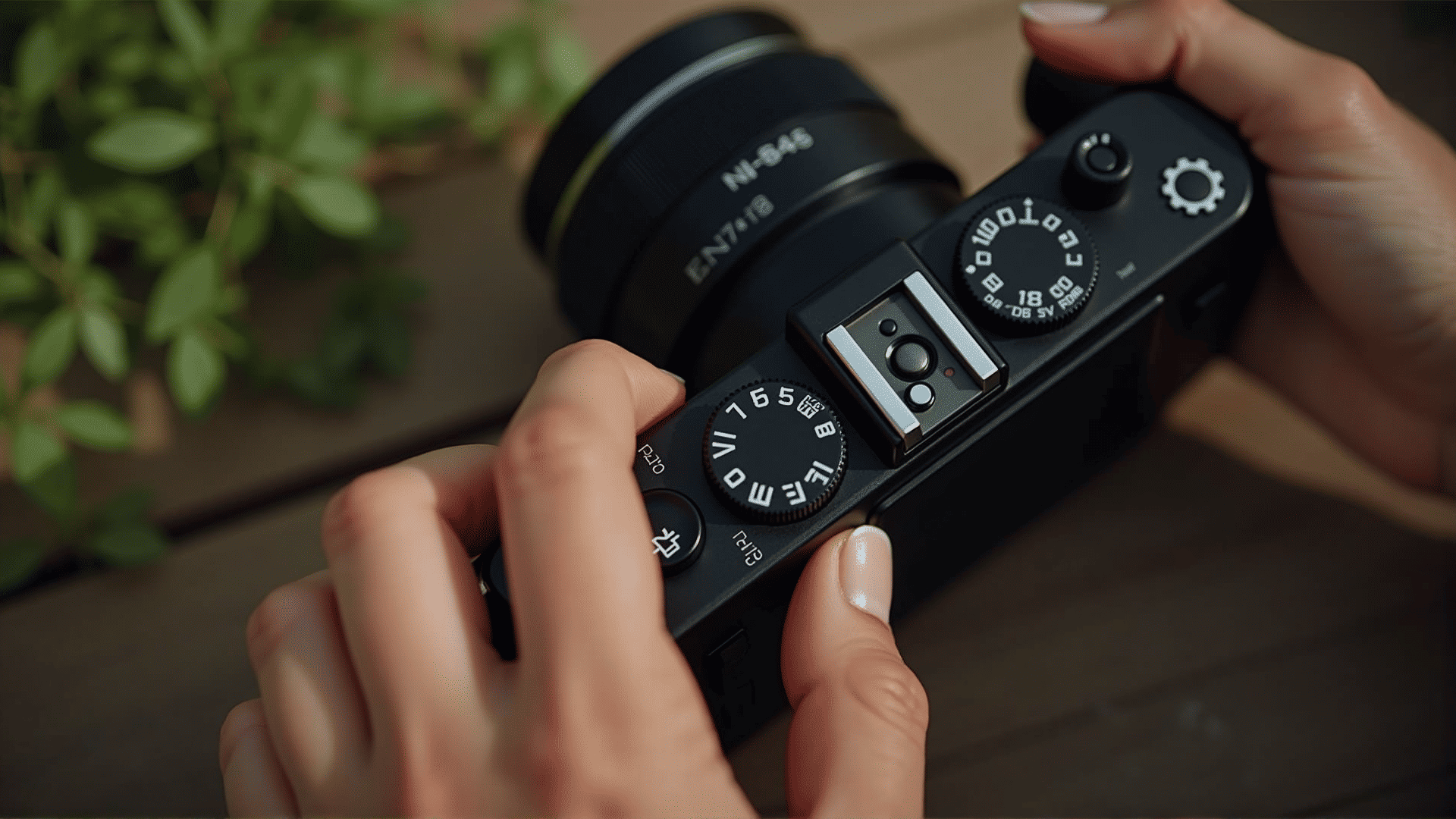
Understanding how to use your camera settings can greatly enhance the quality and creativity of your photographs. By mastering the three fundamental elements of exposure—ISO, shutter speed, and aperture—you can adapt to various lighting conditions and artistic intentions. Here, we’ll delve into each component and explore how to balance them effectively.
ISO: Sensitivity to Light
ISO refers to your camera sensor's sensitivity to light. A lower ISO value (such as 100 or 200) is ideal for bright conditions, providing clear and detail-rich images. However, in low-light situations, a higher ISO (such as 800 or 1600) might be necessary, though it can introduce grain or noise into your photos. The key is to find a balance where you have enough sensitivity to capture the image without sacrificing too much quality.
Shutter Speed: Capturing Motion
Shutter speed determines how long your camera’s shutter stays open to let light in. A fast shutter speed (e.g., 1/1000th of a second) can freeze motion, which is perfect for fast-moving subjects such as sports or wildlife. On the other hand, a slow shutter speed (e.g., 1/30th of a second) can create motion blur, adding dramatic effect to scenes with moving elements, like water or car lights at night. Remember, using slower speeds may require a steady hand or a tripod to prevent unwanted blur.
Aperture: Depth of Field Control
Aperture is the opening in a lens through which light enters the camera. It is measured in f-stops (e.g., f/2.8, f/8, f/16). A larger aperture (low f-stop) allows more light and creates a shallow depth of field, perfect for portraits where you want a blurred background. A smaller aperture (high f-stop) allows less light and provides a deeper depth of field, which is ideal for landscapes where you want most of the scene in focus.
Balancing the Exposure Triangle
Achieving a harmonious balance between ISO, shutter speed, and aperture is crucial to obtaining correct exposure and desired effects. This balance is commonly referred to as the Exposure Triangle. Changing one setting affects the others, so when you adjust one element, you might need to compensate with others to maintain the correct exposure level.
For instance, if you increase your shutter speed to capture fast action, you may need to open up the aperture or increase the ISO to ensure the image is adequately exposed. Similarly, if you lower your ISO to reduce noise, you might have to adjust the shutter speed or aperture, depending on the conditions.
Practical Application and Experimentation
Understanding these settings through experimentation is key. Try shooting the same scene with different settings to observe how each affects the outcome. Practice in different lighting conditions to learn how to adjust quickly and effectively. Many cameras have semi-automatic modes, like Aperture Priority or Shutter Priority, which can help you gradually transition from automatic to full manual control, allowing you to practice adjusting one setting while the camera manages the rest.
By mastering your camera settings and understanding how to manipulate them, you can take control of your photography, capturing images that reflect not just the scene, but also your creative vision.